Business Name: BeeHive Homes of Albuquerque NM - Assisted Living Facility
Address: 6401 Corona Ave NE, Albuquerque, NM 87113
Phone: (505) 221-6400
BeeHive Homes of Albuquerque NM - Assisted Living Facility
BeeHive Village is a premier Albuquerque Assisted Living facility and the perfect transition from an independent living facility or environment. Our Alzheimer care in Albuquerque, NM is designed to be smaller to create a more intimate atmosphere and to provide a family feel while our residents experience exceptional quality care. Memory loss, dementia and Alzheimer's disease are becoming quite pervasive in our society. Dementia care assisted living in Albuquerque NM offers catered memory care services, attention and medication management, often in a secure dementia assisted living in Albuquerque or nursing home setting. We invite you to come and visit our elder care and feel what truly makes us the next best place to home.
6401 Corona Ave NE, Albuquerque, NM 87113
Business Hours
Monday thru Sunday: 9:00am to 5:00pm
Facebook: https://www.facebook.com/BeeHiveHomesAbq
YouTube: https://www.youtube.com/channel/UCNFwLedvRtjtXl2l5QCQj3A
TikTok: https://www.tiktok.com/@beehivevillage6
Families rarely get up one early morning and say, "Let us move Mom into care." The shift toward assisted living generally builds slowly. A few falls. Medication mistakes. The stove left on. You patch things together with drop-in visits and meal delivery till one day it ends up being clear that home, at least in its present form, is no longer the safest place.
For many, the image of assisted living is a large structure that looks like a hotel. Wide passages, central dining room, activity calendars, and a parking lot full of shuttle buses. That model still dominates, but over the last twenty years a quieter option has grown: little, family-style assisted living homes, typically in residential areas, normally with 4 to 10 residents.
These homes use a very different experience of senior care. They can be warm, personal, and less challenging, but they also feature limits that are easy to underestimate. Understanding both sides is necessary before you entrust them with the every day life of someone you love.
What is a family-style assisted living home?
The language varies by state: adult household home, residential care home, board and care, group home. The idea is similar. Instead of an institutional building, you have a house that has been accredited and adjusted for elderly care, frequently with security adjustments and available bathrooms.
Residents usually have personal or semi-private bedrooms and share typical locations like a living-room, dining area, and sometimes a backyard. Personnel prepare meals on site, provide aid with daily activities such as bathing, dressing, and toileting, and often deal with medication administration. Lots of also support early to middle phase memory care, although respite care not all are geared up for advanced dementia.
From the outside, these homes typically look like any other home on the street. Inside, the experience can feel much closer to living with extended family than to residing in a center. That is the appeal, but it likewise suggests you should look harder to comprehend the quality and depth of the care behind the front door.
Why families look beyond traditional assisted living
Large assisted living neighborhoods work extremely well for some senior citizens, particularly those who are social, fairly mobile, and take pleasure in structured activities. Yet I have actually fulfilled many households who understand after a tour that the design does not fit their relative at all.
Common factors they begin checking out family-style settings consist of:
- A parent who is easily overwhelmed by noise and crowds. A partner who has actually become withdrawn after progressing into moderate dementia. A senior who has actually resided in a single-family home for fifty years and visibly tenses up in elevators and long hallways. A history of bad consuming, where quieter, more individually meals may help.
Families also find that in big structures, personnel are spread out thin. A 90-bed structure might have two caretakers on a wing overnight. That ratio can impact action time when someone requires assistance to the bathroom or gets confused at 3 a.m. Smaller sized homes, by design, frequently have fewer homeowners per caretaker, which matters for frail or anxious elders.
Respite care is another chauffeur. When a family caretaker needs a short break or a surgical treatment of their own, a small home might use a trial stay that feels less like sending out Mom to a hotel and more like organizing a momentary household.
How family-style homes are normally staffed and run
No two homes operate exactly the exact same, however there are some repeating patterns that shape the daily experience.
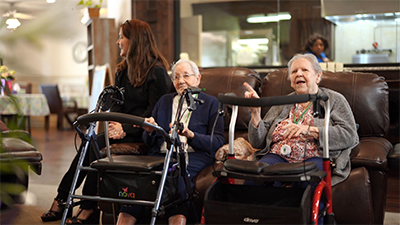
Staffing tends to be constant. You often see the exact same two or 3 caregivers on rotating shifts. Locals are familiar with them, and they learn more about citizens' regimens in information: how someone likes to be woken, what they will eat, how to decrease agitation during personal care. In the better homes, this familiarity translates into fewer behavioral flare-ups for locals with memory concerns, and quicker detection of subtle modifications like reduced appetite or brand-new confusion that could signal infection.
Meals are typically cooked in a standard or semi-commercial kitchen inside the home. This has apparent advantages for individuals who associate the smell of food cooking with comfort and safety. It also enables personnel to adapt on the fly. If someone declines the planned chicken and veggies, a caregiver might switch to an egg, toast, and chopped fruit at the last minute. Larger institutions can struggle to use that level of improvisation for dozens of residents at once.
Activities in family-style homes are frequently casual: music, discussion, easy crafts, tv, walks in the lawn, baking, or helping fold laundry. You rarely see elaborate entertainment schedules. For some locals who do not like group activities, this is ideal. For others who flourish on stimulation, it can feel sparse.
Licensing and guideline vary sharply by state or province. Some jurisdictions deal with small homes as a specific classification of assisted living with detailed rules; others fold them into a more comprehensive residential care category. The legal structure impacts what medical jobs caretakers can perform, which homeowners they can safely admit, and whether they can offer end-of-life care without a transfer to a nursing facility.
The primary benefits of family-style assisted living
When family-style homes work well, they draw their strength from intimacy and scale. A number of benefits appear repeatedly in practice.
A really home-like environment
For many older adults, especially those with advancing memory issues, environment is not just background. It is an everyday orienting tool. The pattern of a couch facing a television, the method a kitchen area smells, the sound of a cleaning device, all send the message: "This is a home."
In a small assisted living home, homeowners can typically see the front door, the kitchen, and the living location from one main area. There are fewer long passages and less shifts between very different environments. For someone with dementia, that decrease in visual and spatial complexity can make it much easier to relax.
I have actually watched homeowners who were upset in a big building cool down within days of moving to a little home. They park themselves where they can see personnel in the cooking area, chat with whoever passes by, and start to re-engage with simple tasks such as peeling veggies or arranging mail. They are not "back to regular," however they are less lost.
Higher staff familiarity and relationship-based care
Caregivers in little homes normally work carefully with the same group of homeowners throughout many shifts. They see how Mrs. K strolls when her arthritis flares, what Mr. D consumes when he is somewhat depressed, how rapidly Ms. L becomes confused when she has a urinary tract infection.
That pattern produces a level of relationship-based senior care that is tough to duplicate at scale. It is not just about warm conversation, though that matters. It is also about noticing early indication. A caretaker who has bathed the very same resident three times a week for a year is more likely to spot a new skin tear, a small pressure sore, or bruising that suggests a fall.
Families typically feel more confident when they can call and speak straight to the caregiver who was on shift, instead of a turning swimming pool of staff, about what occurred that day.
Flexibility in routine
Larger assisted living facilities need to keep to tight schedules to serve dozens of locals efficiently. Breakfast at 8, medications at 9, bathing on specific days, activities at set times. That structure helps many individuals, but it can feel stiff to others.
In a small home, the clock can flex more around the citizens. If someone has actually been a late sleeper all their life, personnel might let them begin the day at 10 a.m. Rather than insisting they remain in the dining-room by 8. If somebody wants to eat percentages six times a day instead of 3 huge meals, that is typically workable.
For elderly care, especially with frail or chronically ill citizens, that versatility can substantially improve comfort. Chronic disease seldom follows the schedule printed on the activity calendar.
Potentially better suitable for specific kinds of memory care
Many family-style homes accept locals with early and middle-stage dementia. The little, repeated environment, constant caregivers, and quieter environments can decrease triggers for wandering, paranoia, or sensory overload.
For example, a female in moderate Alzheimer's illness may have the ability to walk from her room to the living room and back without confusion. In a large facility with numerous passages, social areas, and floors, she may get lost every time she leaves her door.
That stated, not all family-style homes are geared up for complex memory care. The quality of dementia training, staffing ratios, and environmental adaptations (like protected outdoor areas) matters more than the simple fact that the setting is small.
Family participation and transparency
Because the scale is little, families often feel that they can be known as people, not simply as "resident's child in space 214." Managers, owners, and caretakers might all acknowledge them, know their work schedules, and understand household dynamics.
Practical transparency follows. It is easier to see the condition of the entire environment on a single visit. Odors, cleanliness, how staff talk to locals, whether people are engaged or separated, all become apparent rapidly. In a huge building, major concerns can remain covert on a wing that households never ever stroll through.
Some homes actively motivate families to bring recipes, pictures, music playlists, and individual items that help shape customized regimens. That level of personalization is harder when you are navigating a central business policy framework.
Limitations and downsides you should not ignore
For all their strengths, family-style assisted living homes are not the ideal fit for every situation. Some restrictions are inherent to the model, while others depend on particular operators.
Narrower medical and medical capacity
By style, little assisted living homes are social and helpful environments, not mini-hospitals. In the majority of jurisdictions, they do not have nurses on site 24 hours a day. They depend on outside home health nurses, going to doctors, or hospice teams to handle intricate medical needs.
This affects homeowners who:
- Need regular proficient nursing procedures such as routine wound care, tube feeding, or complex injections. Have unstable persistent illness, for example breakable diabetes needing tight monitoring. Experience recurrent extreme behavioral signs related to dementia that may need intensive, coordinated treatment.
In those scenarios, a bigger assisted living community with strong on-site nursing, or in many cases a nursing home, may supply more secure and more thorough care.
It is essential to ask explicitly what the home's admission and retention requirements are. What occurs if your father begins to require two-person transfers, or your mother requires mechanical lifts or oxygen around the clock? Numerous homes will reach a point where they should request a transfer, often with limited notice.
Staffing vulnerabilities
The intimacy that makes small homes appealing can also create danger. When a large facility loses two caregivers, they normally have a bigger swimming pool to draw from, company backups, and central HR. In a six-bed home with three core caregivers, the abrupt disease or departure of one person can throw the entire schedule into disarray.
You may see stretches where a single caretaker covers the whole house for numerous hours. That may be legally allowed, however it has implications. Reaction times extend. A caregiver who needs to prepare lunch, assistance somebody to the bathroom, and manage a confused resident all at once is one fall or crisis far from being overwhelmed.
Night staffing likewise differs commonly. Some homes have an awake caregiver in the house all night. Others utilize "sleep personnel" who are on website however not required to remain awake unless called. For residents at threat of wandering, nighttime incontinence, or nighttime stress and anxiety, that difference matters significantly. It is among the very first things to clarify when you tour.
Limited social and activity options for extroverted residents
A small home with 6 residents, two of whom are non-verbal and one tough of hearing, simply can not provide the exact same social intricacy as a large assisted living neighborhood with 80 homeowners and a full-time activities department.
Some residents love the peaceful. They prefer speaking with one or two familiar faces, enjoying tv, and basic jobs. Others end up being lonely. They miss card games with four different partners, larger religious services, or group outings.
If your relative has actually always drawn energy from a crowd, a family-style setting might not provide adequate stimulation. You can attempt to supplement with frequent family visits or community programs, however you can not alter the fundamental math of a small house.
Regulation and oversight variability
From a family's point of view, guideline is unnoticeable until something fails. In practice, little homes might fall under different licensure classifications than bigger assisted living facilities and might be inspected less frequently.
Some states have robust oversight with transparent evaluation reports readily available online. Others provide little detail to the general public. This does not imply small homes are risky by default. Numerous are remarkably well run. It does imply that households need to do more homework: checking problems records, asking about previous citations, and assessing owner involvement.
If you stroll into a home and the owner or administrator is typically present, engaged with citizens, and educated about policies, that is a positive sign. If management is remote and rarely seen, staff turnover is high, and no one seems to understand when the last evaluation happened, care is warranted.
Financial structure and long-term affordability
Costs vary by region, however family-style assisted living typically occupies the mid-range of rates. Regular monthly charges may be similar to or a little less than a larger assisted living building, however more than some independent living alternatives. Memory care, since of higher staffing requirements, typically comes at a premium.
Important monetary concerns consist of:
- Whether the home accepts long-term care insurance coverage and what paperwork they provide. Whether they take part in Medicaid or other public financing programs, and if so, whether there is a waiting list. How rates alter as care needs increase. Some homes charge a flat rate; others use a tiered system where each brand-new level of care includes numerous dollars per month.
Families often make the mistake of selecting a setting that fits their present spending plan however has no path to affordability if cost savings decline. Having a frank conversation at the start about what takes place when funds run low is part of accountable planning.
Who tends to do well in a family-style home?
Choosing the ideal senior care setting is less about what looks good and more about how well the environment matches an individual's history, character, and medical profile. For many years, a few patterns have stood out.
Residents who often prosper in family-style assisted living consist of:
- Individuals with early or middle-stage dementia who become anxious or lost in large, hectic buildings. People who value quiet, regular, and familiar faces more than a wide range of activities or amenities. Elders with fairly stable medical conditions who mainly require assist with day-to-day activities, medication management, and mild supervision. Seniors who grew up in or invested most of their lives in single-family homes or little neighborhoods and discover institutional settings alienating. Families who want to be closely included with caregivers, prefer quick access to decision-makers, and value an extremely individual relationship with individuals supplying elderly care.
On the other side, there are homeowners for whom a small home is often not ideal. Really social individuals who crave a large range of occasions, those with high medical complexity or rapidly altering conditions, and individuals who need protected, specialized habits management sometimes do better in bigger, more clinically intensive settings.
The function of family-style homes in memory care and respite care
Memory care is not a particular structure type so much as a bundle of abilities: personnel training in dementia, environmental adjustments, tailored activities, and safety measures. Some large facilities have committed memory care wings; some little homes focus on dementia and supply exceptional support.
In a good family-style memory care home, you normally see:
Residents moving easily within a protected, foreseeable area, rather than being restricted to their spaces. Familiar items, like image walls and individual blankets, are all over. Personnel use short, simple sentences, avoid arguing with homeowners' reality, and redirect gently when confusion or agitation flare. Activities are matched to the stage of disease, such as arranging things, singing along to music, or brief monitored walks.
The small scale likewise supports strong partnership with hospice when locals reach the end of life. Households can sit at the bedside in a real bed room, not a semi-medical bay, and personnel often know the resident's and family's choices in information. When it works, it can feel less like a transfer to "end-of-life care" and more like extending home.
Respite care in a family-style setting can be especially important for screening fit. A one- or two-week stay allows your relative to experience the environment while you see how staff respond, what interaction resembles, and whether your own tension level modifications. Many caretakers find throughout respite that their loved one does much better with more structure and friendship than they had the ability to offer alone, which in turn notifies longer-term decisions.
Questions to ask when touring a family-style assisted living home
A tour is not a favor the home is providing for you. It is your job interview of them. Thoughtful questions frequently reveal more than polished brochures.
Consider utilizing the following list throughout or after your visit:
What is the staffing pattern by day and by night, and what happens if a caretaker contacts sick? What particular types of care can you not supply, and at what point would you ask for a transfer? How are medications managed, who supervises them, and how are changes interacted to families? What is your experience with dementia, and how do you manage habits like roaming or sundowning? Can I see your most recent assessment report, and how were any shortages corrected?Pay as much attention to how personnel communicate with current citizens as to the words of the individual giving the tour. A quick, kind discuss a resident's shoulder or a caretaker who instinctively crouches to eye level when speaking with somebody in a recliner chair tells you more about the culture than any marketing line about "resident-centered care."
Balancing heart and head in the last decision
Family-style assisted living homes occupy a vital niche in the spectrum of senior care. They can offer warmth, connection, and a sense of ordinary life that larger centers battle to match. They can likewise fall short when medical requirements intensify, when staffing is thin, or when a resident requirements more stimulation than six or 7 housemates can provide.
The choice is seldom easy. You balance your loved one's preferences, medical truths, financial restraints, and your own capability as a caregiver. Feelings run high. It helps to deal with the procedure as a living decision rather than a once-and-for-all decision. You can begin with respite care, reassess after health changes, and remain open to changing the plan.
What matters most is not the label on the building but the quality of attention your relative gets there. Whether in a large community or a little residential home, the right environment is the one where your loved one is safer, more comfy, and dealt with as an individual with a history, not simply a bed to be filled. Family-style assisted living, when selected with clear eyes and comprehensive questions, can be exactly that location for many older adults.
BeeHive Homes of Albuquerque NM - Assisted Living Facility provides assisted living care
BeeHive Homes of Albuquerque NM - Assisted Living Facility provides memory care services
BeeHive Homes of Albuquerque NM - Assisted Living Facility provides respite care services
BeeHive Homes of Albuquerque NM - Assisted Living Facility supports assistance with bathing and grooming
BeeHive Homes of Albuquerque NM - Assisted Living Facility offers private bedrooms with private bathrooms
BeeHive Homes of Albuquerque NM - Assisted Living Facility provides medication monitoring and documentation
BeeHive Homes of Albuquerque NM - Assisted Living Facility serves dietitian-approved meals
BeeHive Homes of Albuquerque NM - Assisted Living Facility provides housekeeping services
BeeHive Homes of Albuquerque NM - Assisted Living Facility provides laundry services
BeeHive Homes of Albuquerque NM - Assisted Living Facility offers community dining and social engagement activities
BeeHive Homes of Albuquerque NM - Assisted Living Facility features life enrichment activities
BeeHive Homes of Albuquerque NM - Assisted Living Facility supports personal care assistance during meals and daily routines
BeeHive Homes of Albuquerque NM - Assisted Living Facility promotes frequent physical and mental exercise opportunities
BeeHive Homes of Albuquerque NM - Assisted Living Facility provides a home-like residential environment
BeeHive Homes of Albuquerque NM - Assisted Living Facility creates customized care plans as residents’ needs change
BeeHive Homes of Albuquerque NM - Assisted Living Facility assesses individual resident care needs
BeeHive Homes of Albuquerque NM - Assisted Living Facility accepts private pay and long-term care insurance
BeeHive Homes of Albuquerque NM - Assisted Living Facility assists qualified veterans with Aid and Attendance benefits
BeeHive Homes of Albuquerque NM - Assisted Living Facility encourages meaningful resident-to-staff relationships
BeeHive Homes of Albuquerque NM - Assisted Living Facility delivers compassionate, attentive senior care focused on dignity and comfort
BeeHive Homes of Albuquerque NM - Assisted Living Facility has a phone number of (505) 221-6400
BeeHive Homes of Albuquerque NM - Assisted Living Facility has an address of 6401 Corona Ave NE, Albuquerque, NM 87113
BeeHive Homes of Albuquerque NM - Assisted Living Facility has a website https://beehivehomes.com/locations/albuquerque/
BeeHive Homes of Albuquerque NM - Assisted Living Facility has Google Maps listing https://maps.app.goo.gl/3oqufzNUPNMqK22LA
BeeHive Homes of Albuquerque NM - Assisted Living Facility has Facebook page https://www.facebook.com/BeeHiveHomesAbq
BeeHive Homes of Albuquerque NM - Assisted Living Facility has an YouTube page https://www.youtube.com/channel/UCNFwLedvRtjtXl2l5QCQj3A
BeeHive Homes of Albuquerque NM - Assisted Living Facility won Top Assisted Living Homes 2025
BeeHive Homes of Albuquerque NM - Assisted Living Facility earned Best Customer Service Award 2024
BeeHive Homes of Albuquerque NM - Assisted Living Facility placed 1st for Senior Living Communities 2025
People Also Ask about BeeHive Homes of Albuquerque NM
What is BeeHive Homes of Albuquerque NM Living monthly room rate?
The rate depends on the level of care that is needed. We do a pre-admission evaluation for each resident to determine the level of care needed. The monthly rate is based on this evaluation. There are no hidden costs or fees
Can residents stay in BeeHive Homes until the end of their life?
Usually yes. There are exceptions, such as when there are safety issues with the resident, or they need 24 hour skilled nursing services
Do we have a nurse on staff?
Yes. We have a registered nurse on premise 40 hours/week. In addition, we have an on-call nurse for any after-hours needs
What are BeeHive Homes’ visiting hours?
Visiting hours are adjusted to accommodate the families and the resident’s needs… just not too early or too late
Do we have couple’s rooms available?
Yes, each home has rooms designed to accommodate couples. Please ask about the availability of these rooms
Where is BeeHive Homes of Albuquerque NM located?
BeeHive Homes of Albuquerque NM is conveniently located at 6401 Corona Ave NE, Albuquerque, NM 87113. You can easily find directions on Google Maps or call at (505) 221-6400 Monday through Sunday 9:00am to 5:00pm
How can I contact BeeHive Homes of Albuquerque NM?
You can contact BeeHive Homes of Albuquerque NM - Assisted Living Facility by phone at: (505) 221-6400, visit their website at https://beehivehomes.com/locations/albuquerque/ or connect on social media via Facebook TikTok or YouTube
Take a drive to Cracker Barrel Old Country Store. Cracker Barrel Old Country Store offers familiar comfort food that residents in assisted living, memory care, senior care, elderly care, and respite care can enjoy during relaxed meals.